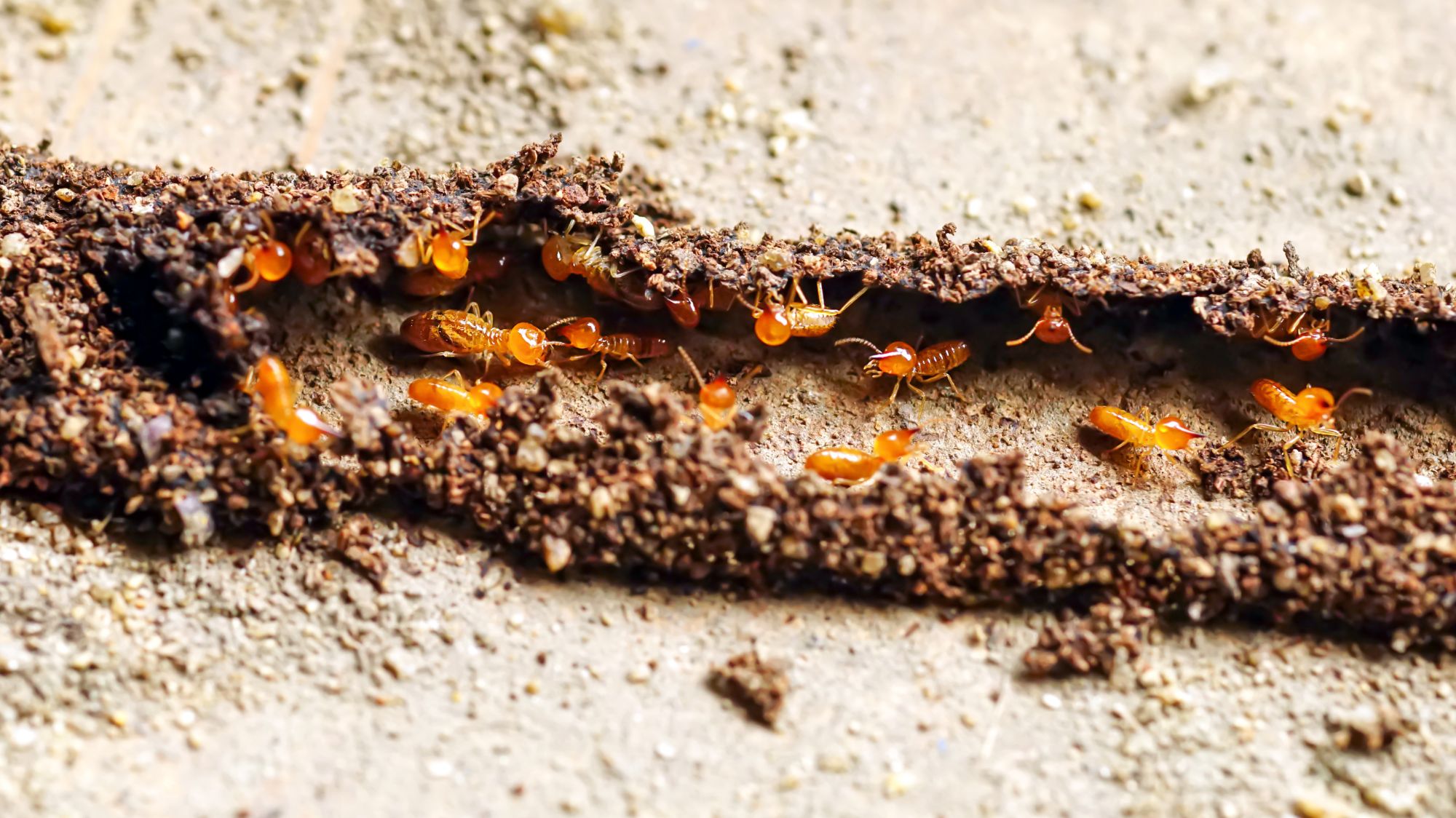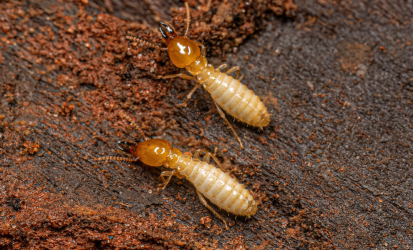
When a home in Singapore is dealing with subterranean termites, the choice usually comes down to two established methods: soil treatment or baiting systems. Both work, but they work differently, cost differently, and suit different property types. Understanding these trade-offs before committing to a method helps homeowners avoid paying for an approach that isn’t actually the right fit for their property.
Two Methods, Two Different Mechanisms
Soil Treatment
Termite soil treatment, sometimes called a chemical barrier or termiticide treatment, involves injecting termiticide into the soil around and beneath a structure’s foundation. The goal is to create a continuous treated zone that termites cannot cross undetected — they either die on contact or, with newer non-repellent formulations, carry the chemical back to the colony and spread it further. This method has a long track record in Singapore’s subterranean termite treatment landscape and tends to act relatively quickly once applied, since the barrier is in place from day one rather than depending on termites finding and interacting with bait stations first.
Baiting Systems
Baiting systems take a fundamentally different approach. Stations containing a slow-acting toxicant are placed around a property’s perimeter, and termites forage into them, carry the bait back to the colony, and gradually transfer it through the colony’s natural food-sharing behaviour. This is slower to show results — often weeks to a few months — but it targets the colony itself rather than simply creating a barrier the termites cannot cross. For colonies that are difficult to locate directly, baiting can eventually eliminate the source entirely rather than just keeping it out.
Cost and Effectiveness Trade-Offs
These mechanical differences drive the cost and speed trade-offs homeowners actually experience. Soil treatment tends to involve a larger upfront cost due to the volume of termiticide and labour required to treat a full perimeter, but it acts fast and suits situations where a visible, active infestation needs to be stopped immediately. Subterranean termite control using baiting systems often has a lower initial cost and less disruption during installation, but requires ongoing monitoring and station servicing over months, which adds to the total cost of ownership across the life of the programme.
Neither method is universally superior — the right choice depends on urgency, budget, and critically, the type of property involved.
Landed Properties vs HDB and Condo Units
This is where the choice often becomes straightforward rather than a genuine toss-up. Landed homes, with direct soil contact around the entire structure, are generally strong candidates for full perimeter soil treatment, since there is open ground available to treat and termites typically have multiple possible entry points along the foundation.
HDB flats and condo units, by contrast, often have limited or no direct soil access at ground level, especially on higher floors, making baiting systems or targeted above-ground treatment more practical — and in some cases the only feasible option, since there may be no accessible soil perimeter to inject at all. For most HDB and condo termite infestation treatment situations in Singapore, this practical constraint, more than personal preference, ends up determining which method actually applies.
Why Rankings and Recommendations Can Vary Over Time
Homeowners researching termite treatment in Singapore will sometimes notice that recommendations, reviews, or rankings for treatment providers shift over time. This is a normal feature of any actively maintained service category rather than a sign that the underlying science has changed. New product formulations, updated NEA guidance, and evolving best practices mean that a treatment approach recommended a few years ago may be refined today — not because the earlier advice was wrong, but because the field continues to develop. What matters most for homeowners isn’t chasing whichever method is trending, but matching the treatment method to the actual property type and infestation situation, as outlined above.
Getting a Proper Assessment First
Independent industry guidance generally frames the choice the same way: identify the termite species and site conditions first, then match the treatment method to the property type rather than defaulting to whichever method a given company happens to specialise in. A company that only offers one method may recommend it regardless of whether it is genuinely the best fit for a specific home — which is exactly why a proper inspection matters before any treatment decision. Our detailed guide on what happens during a professional pest inspection explains what a thorough termite assessment actually involves.
A Comparison in Practice: Two Singapore Properties
Consider two contrasting cases. A landed terrace house in Serangoon Gardens showed visible mud tubes along an external wall and active termite damage to a timber door frame. Because the property had full soil access around its perimeter, a soil treatment barrier was installed, and activity stopped within days of application — the fast-acting nature of the method suited the visible, active infestation well.
Compare that to a 12th-floor condo unit in Bishan with suspected termite activity along a balcony timber decking. With no ground-level soil access from that unit, a baiting station programme was installed instead, targeting the colony through the building’s shared structural elements over several months. Activity gradually declined and was confirmed resolved at the follow-up inspection roughly ten weeks later. Neither property’s outcome would have been achievable using the other property’s method — the soil treatment simply wasn’t physically possible for the condo unit, and the slower baiting approach would have left the landed property’s visible, active infestation untreated for longer than necessary.
This is the practical reality behind the choice: it’s rarely a matter of which method is objectively “better,” but which method is actually available and appropriate given the property’s physical constraints.
Frequently Asked Questions
How long does termite soil treatment last?
Most professional soil treatments carry a warranty period of several years, though this varies by product formulation and soil conditions specific to the property.
Are baiting systems safer than soil treatment for households with children or pets?
Both methods, when applied by licensed technicians using NEA-approved products, are designed for safe residential use. Baiting stations are typically tamper-resistant and less accessible than a treated soil barrier.
Can both methods be combined on the same property?
In some cases, yes — particularly on larger properties where certain areas suit soil treatment while others, such as elevated structures, are better served by baiting.
How do I know which method my property needs?
A professional inspection assessing soil access, existing termite activity, and structural layout is the most reliable way to determine the appropriate method, rather than guessing based on cost alone.
Does termite treatment need to be repeated regularly?
Most treatments include a warranty period with monitoring, and retreatment is typically only needed if new activity is detected within or after that period.
Get a Professional Termite Assessment
Choosing between termite soil treatment and baiting systems doesn’t need to be a guessing game. The right method depends on your property type, the extent of any existing activity, and practical constraints like soil access — all of which a proper inspection can clarify. We provide NEA-approved termite treatment across landed homes, HDB flats, and condos in Singapore, using whichever method genuinely fits the property.
Contact Pestopia today for a termite inspection and a treatment recommendation based on your property, not a one-size-fits-all package.