


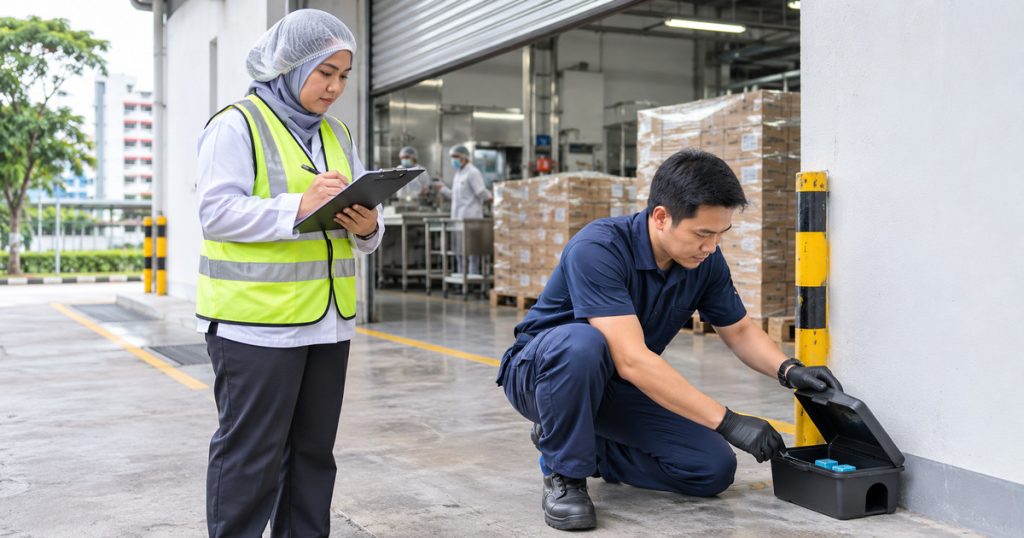
A single rat seen on a production floor can stop a line, spoil a batch of stock and raise hard questions from customers and auditors. Factories in Singapore face risks that homes and offices rarely do: raw materials stored in bulk, loading bays that stay open for hours, canteens feeding large shifts and drains that run across the whole site. Good pest control for factories Singapore operators can rely on is not a monthly spray. It is a programme that stops pests from settling in, picks up early signs and keeps records ready for inspection.
This guide explains why factories attract pests, how risks differ between food and non-food plants, what a scheduled programme should include and how to close gaps between visits.
Why Factories Attract Pests
Pests need food, water and shelter. A typical factory offers all three, often in places nobody checks every day.
Raw Material Storage
Sacks of flour, sugar and grain, rolls of packaging, cardboard cartons and pallets stacked against walls give rodents and cockroaches both food and cover. Stock that is rarely moved is where infestations usually begin, because activity behind it goes unnoticed for weeks.
Loading Bays and Dock Doors
Dock doors left open during deliveries are the main way in for rats coming from drains and nearby bin centres. Small gaps matter too. According to SFA’s Good Pest Management Practices guide, rats can squeeze through a gap of about half an inch, such as the space under a door, so a worn door seal is enough to let them in.
Canteens, Pantries and Waste Areas
Worker canteens and pantries produce food waste every day. Bins that are left uncovered or are not emptied by the end of the day draw cockroaches, flies and rats close to production and storage areas.
Drains, Floor Traps and Night-Shift Lighting
Floor traps and gullies without proper gratings give cockroaches and rats a direct route inside. Bright lighting during night shifts also attracts flying insects to doorways, where they slip in every time a door opens.
Food Processing Plants vs. General Manufacturing
The pests are similar across most factories, but the consequences are not.
Food Processing and Storage
For food factories, pest control is a licensing requirement, not just good housekeeping. The Singapore Food Agency (SFA) requires applicants for a Licence to Operate a Food Processing Establishment to submit a pest control programme covering rodents and cockroaches, together with a copy of their contract with a pest control company, at the final inspection before the licence is issued. SFA also states that treatments using chemical, physical or biological agents should only be carried out by, or under the direct supervision of, qualified personnel.
Food plants must also keep pesticides away from products and food contact surfaces. Physical controls such as traps and glue boards are preferred inside processing areas, while rodenticide is kept in tamper-resistant bait stations along the perimeter.
General Manufacturing and Assembly
Electronics, packaging and engineering plants may not handle food, but they still have canteens, cardboard and cabling. Rodents gnaw through wiring and insulation, which can cause equipment faults and fire risks, and cockroaches nesting in control panels can trip sensitive electronics. These sites usually need fewer visits than food plants, with the same focus on proofing.
What a Scheduled Factory Programme Should Include
A factory programme from an NEA licensed pest control Singapore provider should be built around the site itself rather than a standard package. These are the elements to expect.
Site Survey and Risk Map
The operator walks the whole site, including the perimeter, and marks high-risk zones such as receiving areas, raw material stores, the canteen and waste points. The result is a site plan showing where every bait station, trap and insect light trap is placed, so each one can be checked and recorded at every visit.
Monitoring Stations and Rodent Proofing
Expect bait stations along the external perimeter, traps and glue boards inside, and insect light traps near entrances. Proofing work covers door seals, gaps around pipes and cable entries, and the void above false ceilings, which can connect to neighbouring units. A good rodent control singapore programme combines baiting, trapping and proofing rather than relying on bait alone.
Service Reports and Audit Records
Every visit should end with a dated report showing what was inspected, what was found, what was treated and what the factory needs to fix. These reports are what customers, certification auditors and SFA officers ask to see.
Clear Targets and Response Times
The contract should list the target pests, the areas covered, the visit frequency and how quickly the operator responds to a sighting between visits. Pestopia’s commercial pest control singapore contracts are set up around these points, and factories with large storage areas can add a pest control for warehouses singapore programme for their stores.
Closing the Gaps Between Visits
Most factory infestations start between scheduled visits, so the factory team has a part to play. Keep raw materials on pallets, off the floor and away from walls so they can be inspected from all sides. Cover bins and empty them at least at the end of each day’s operation. Check that floor traps have gratings and that air curtains, screens and self-closing doors are working. Seal new holes after renovation or equipment installation, and record any sighting with the time and location so the operator can respond quickly.
Review service reports at each visit rather than simply filing them. When the same recommendation appears in three reports in a row, it usually points to a structural issue that needs a maintenance work order, not another round of treatment.
Choosing a Provider for Your Factory
When comparing quotes for pest control for businesses Singapore factories can depend on, check the operator’s NEA registration, the technicians’ licences, their experience with factories like yours and a sample service report. Price matters, but a cheap contract with fewer visits and thin reports often costs more when an audit fails. Our guide to affordable pest control singapore Affordable Pest Control in Singapore: What Affects the Cost and What Cheap Quotes Leave Out explains what a fair quote should include.
Factories with staff canteens or central kitchens should also meet food-area standards in those spaces. The same approach we use for pest control for restaurants singapore applies to these areas.
Frequently Asked Questions
How often should a factory have pest control?
It depends on the site. Food factories commonly have monthly visits or more, while general manufacturing plants may need bi-monthly or quarterly visits. A site survey is the best way to set the right frequency.
Do food factories in Singapore need a pest control contract?
Yes. SFA asks applicants for a food processing establishment licence to submit a pest control programme and a copy of their pest control contract at the final inspection.
Can pest control be done without stopping production?
Usually, yes. Monitoring and baiting can be done during normal operations, and treatments in sensitive areas can be scheduled around shifts. After-hours visits can be arranged, with a surcharge.
Which pests are most common in Singapore factories?
Rats, cockroaches and flies are the most common, followed by ants and stored-product insects in plants that handle grain, flour or dried goods.
What should staff do if they see a rat?
Note the time and location, avoid moving bait stations or traps, keep the area clean and report it to the pest control operator straight away so entry points can be checked.
Keep Your Factory Audit-Ready
A factory that treats pest control as a programme rather than a reaction protects its stock, its equipment and its licence. As an NEA-licensed provider of pest control singapore services, Pestopia can survey your site, set up monitoring and keep your records ready for every audit. Contact us today to arrange a factory site survey.
REFERENCES:
- Singapore Food Agency. (2026). Application Process & Fees for Licence / Registration for Food Manufacturing & Storage. SFA Singapore. https://www.sfa.gov.sg/food-manufacturing-storage/licence-registration/application-process-fees-for-licence-registration-for-food-manufacturing-storage
- Singapore Food Agency. (n.d.). Good Pest Management Practices. SFA Singapore. https://sfa.gov.sg/docs/default-source/tools-and-resources/resources-for-businesses/(english)-good-pest-management-practices