


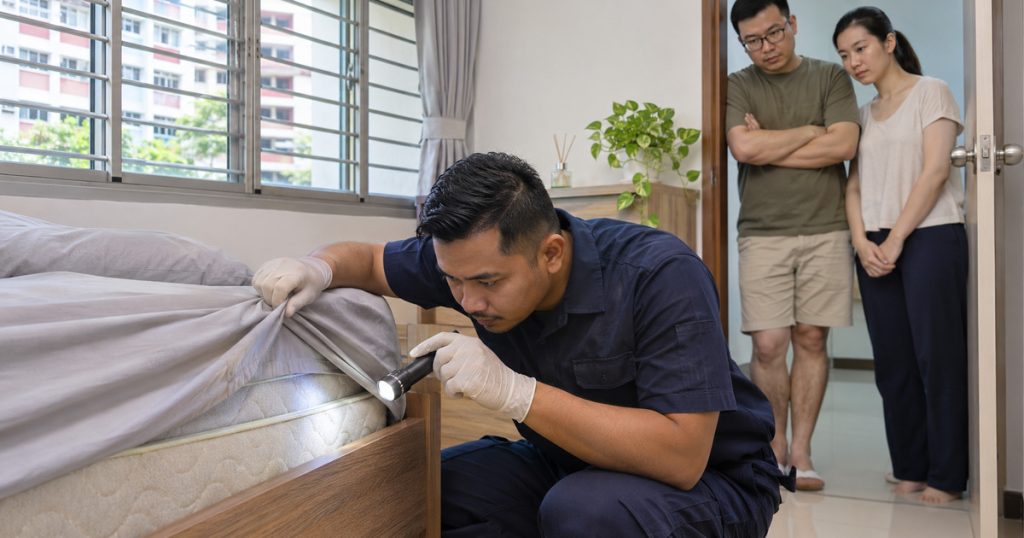
The bites stopped for a few days after the treatment, and then they started again. It is one of the most common and frustrating experiences with bed bugs, and it leads many people to assume the treatment failed. In most cases, the problem is not the product but the plan. Effective bed bug treatment in Singapore is rarely a single visit. Bed bugs hide well, their eggs survive, and they spread in ways that a one-off spray cannot reach. This article explains why bed bugs come back and how a properly timed follow-up visit stops the cycle.
Why One Treatment Is Often Not Enough
Eggs Survive
Adult bed bugs are the visible part of the problem. According to HealthHub, an adult female lays about 200 to 500 eggs in her lifetime, and finding even one bug can be a sign that an infestation is building. Eggs are tucked into seams and cracks and are far harder to kill than adults. Any eggs that survive the first visit hatch in the days and weeks that follow, and those young bugs start feeding again.
They Hide in More Places Than the Bed
The National Environment Agency (NEA) notes that bed bugs range from about 1mm when young to 10mm as adults, and that they hide in sleeping areas, under wallpaper, behind picture frames, inside electrical outlets, in box springs and mattress pads, and in bedside tables. If a treatment covers only the mattress, bugs in these other spots simply wait it out.
Resistance to Common Insecticides
HealthHub also points out that bed bugs have developed resistance to several common insecticides, and that relying on vacuuming alone may not resolve an infestation. Over-the-counter sprays often scatter bed bugs into new hiding places instead of killing them, which spreads the problem further.
They Survive Long Without Feeding
Bed bugs can live for a long time without a meal and can crawl a long way in a single night. Leaving a room empty for a few weeks or sleeping elsewhere does not starve them out.
How Residents Accidentally Spread Them
When bites start, many people move to the sofa or another bedroom. Bed bugs follow the person, so moving rooms usually spreads the infestation to a second sleeping area. Carrying bags, pillows or clothing from an infested room to other parts of the home has the same effect.
Throwing out a mattress without treating and wrapping it first is another common mistake. Bugs drop off along the corridor and lift lobby, and anyone who picks up discarded furniture may take them home. Second-hand furniture, especially upholstered items, should always be checked carefully before it comes into the house.
What a Proper Treatment Plan Looks Like
A Thorough Inspection First
A good plan starts by finding every harbourage, not just the bed. NEA notes that detection is done through visual inspection of furniture and the use of surveillance traps, and that treatment and control plans usually combine non-chemical and chemical methods such as vacuuming, hot laundering, steam and heat treatment, removing harbourages and insecticides.
Targeted Treatment
The first visit treats seams, bed frames, headboards, sockets, skirting and furniture near the bed, using methods suited to each surface. Heat and steam reach places that sprays miss, and bed bugs die at temperatures above 50°C.
A Follow-Up Visit Timed to the Egg Hatch Cycle
This is the step that stops bed bugs from coming back. The follow-up visit is scheduled to catch young bugs that have hatched from eggs the first visit could not reach, before they mature and lay eggs of their own. The technician also checks traps and monitors to confirm activity is falling. Pestopia’s bed bug extermination singapore service includes this follow-up as part of the plan rather than as an optional extra.
Why a Cheap One-Off Spray Often Costs More
A single low-cost spray can look like the sensible choice, but when eggs survive and bites return a week later, you end up paying for a second full treatment, replacing bedding and losing more sleep. When comparing quotes, check whether the price includes an inspection of the whole room, treatment of furniture and sockets as well as the bed, and a follow-up visit. A quote that leaves out the follow-up is usually only half a treatment. Our guide to affordable pest control singapore Affordable Pest Control in Singapore: What Affects the Cost and What Cheap Quotes Leave Out explains what a fair quote should include.
What to Do Between Visits
Your part between visits makes a real difference. Keep sleeping in your own bed so bugs stay where the treatment is focused. Wash bedding and clothing on the hottest setting the fabric allows and dry them on high heat. Vacuum around the bed and skirting, then seal the vacuum bag in plastic and throw it out straight away. Reduce clutter around the bed, and avoid using your own sprays, which can push bugs out of treated areas.
If bites are new or the infestation is spreading quickly, ask about same day pest control singapore slots so the first treatment is not delayed.
When It Is Coming From Next Door
If bed bugs keep returning despite a full programme and good preparation, the source may be outside your unit. In HDB blocks and condos, bed bugs can travel between units through wall gaps, service ducts and shared corridors. In that case, a pest infestation treatment Singapore residents can rely on means talking to neighbours, the Town Council or the MCST, so that affected units are treated together. Our pest control hdb singapore team can advise on how to coordinate this.
Travel is the other common source. The Ministry of Sustainability and the Environment (MSE) has advised travellers returning to Singapore to take care not to bring bed bugs back into their homes and workplaces, and has encouraged premises owners to engage professional pest control operators if an infestation occurs. Check luggage after every trip and wash travel clothes straight away.
Frequently Asked Questions
How many visits does bed bug treatment usually need?
Most cases need at least two visits: an initial treatment and a follow-up timed to catch newly hatched bugs. Heavy infestations may need more.
Do bed bugs spread disease?
Bed bugs are not known to transmit diseases to humans, but their bites can cause itching, discomfort and allergic reactions in some people.
Should I throw away my mattress?
Not usually. Most mattresses can be treated. If you do dispose of one, have it treated and wrapped first so bugs are not spread along the way.
Can I stay at home during treatment?
Usually, yes. Your technician will explain how to prepare the room and how long to stay out of treated areas.
How do I know the bed bugs are gone?
No new bites, no fresh stains on the sheets and no activity in traps over several weeks after the final visit are good signs.
Stop the Cycle With a Complete Plan
Bed bugs come back when a treatment stops halfway. A thorough inspection, targeted treatment and a well-timed follow-up visit give you the best chance of bed bug removal that lasts. As an NEA-licensed provider of pest control singapore services, Pestopia handles bed bug cases in HDB flats, condos, landed homes and hospitality premises. Contact us today to book your bed bug inspection.
REFERENCES:
- National Environment Agency. (2026). Management of Bed Bugs. NEA Singapore. https://www.nea.gov.sg/our-services/pest-control/management-of-bed-bugs
- HealthHub. (2024). What’s Bugging You? Health Promotion Board, Singapore. https://www.healthhub.sg/live-healthy/whats-bugging-you
- Ministry of Sustainability and the Environment. (2024). Written Reply to Parliamentary Question on Measures to Detect and Prevent Bedbugs Infestation. MSE Singapore. https://www.mse.gov.sg/latest-news/written-reply-to-pq-on-measures-to-detect-and-prevent-bedbugs-infestation/