Most homeowners think about pest control one problem at a time — cockroaches this month, a termite scare next year, bed bugs after a trip. Treated this way, pest control becomes a series of reactive callouts rather than a coordinated approach to a home that has several distinct pest-risk zones, each with its own entry points and warning signs. A room-by-room view makes it easier to catch problems early and understand why the same treatment doesn’t work equally well everywhere.
The Kitchen: Cockroaches and Ants
Kitchens combine the two things cockroaches and ants need most — food residue and moisture — making them the most consistently pest-prone room in any Singapore home, HDB flat or landed alike. Cockroaches favour the dark, warm spaces under refrigerators, inside cabinet voids, and around drainage pipes, while ants are drawn to even small amounts of spilled food or sugar residue left on counters overnight.
Supermarket sprays only address roaches visible at the time of spraying; the colony living inside cabinet voids or wall cavities survives untouched. Professional cockroach control using NEA-approved gel baiting works differently — worker roaches carry the bait back to the nest, eliminating the colony at its source rather than just the individuals seen scurrying when a light switches on.
Bedrooms: Bed Bugs and Dust Mites
Bedrooms present a different pest profile entirely. Bed bugs hide in mattress seams, bed frame joints, and skirting board gaps near the bed, feeding at night and going undetected for weeks until bites or small blood spots on sheets prompt a closer look. Unlike kitchen pests, bed bugs don’t respond to food-source control — cleanliness doesn’t prevent an infestation, since bed bugs arrive via luggage, secondhand furniture, or clothing rather than food residue.
Bed bug treatment typically combines heat treatment or targeted chemical application with a follow-up inspection, since eggs can survive an initial treatment and hatch days later. Dust mites, while not eliminated the same way, are reduced through regular mattress and linen cleaning combined with humidity control, since Singapore’s humidity supports the moisture-loving conditions dust mites need to thrive.
Bathrooms: Moisture-Driven Pests
Bathrooms attract a different category again — moisture pests such as silverfish, drain flies, and psocids that thrive wherever standing water, condensation, or organic build-up in drains creates a damp micro-environment. These are less structurally damaging than termites or cockroaches but can indicate a broader moisture problem in the home, such as poor bathroom ventilation or a slow drain leak, that’s worth addressing alongside any pest treatment.
Keeping floor traps clear, fixing minor leaks promptly, and ensuring adequate ventilation reduces the conditions these pests rely on, though persistent activity despite good housekeeping usually points to a drainage issue worth having assessed alongside pest treatment.
Structural Areas: The Termite Risk Most People Miss
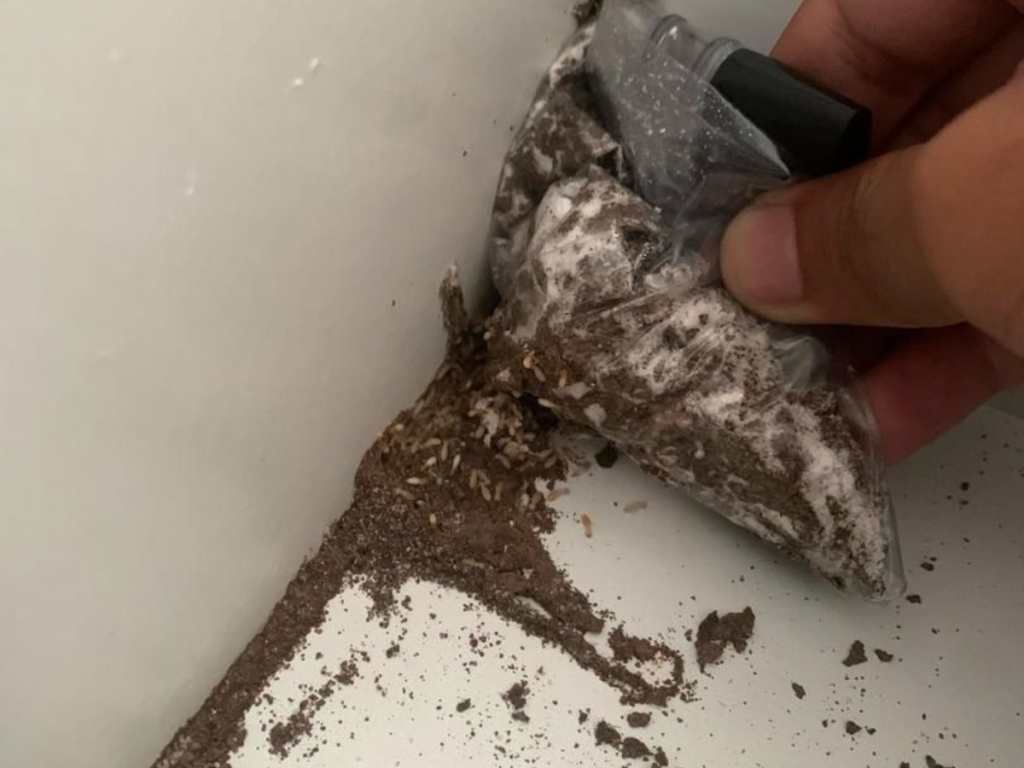
Termites don’t announce themselves the way visible pests do — a subterranean termite exterminator is usually called only after mud tubes, hollow-sounding timber, or a swarm of discarded wings near a window sill after rain finally makes the problem visible. By that point, the colony has often been active for months, feeding on structural timber, skirting, or door frames from the inside while the surface looks intact.
Structural areas — foundation walls, roof voids, under staircases, and any point where timber meets soil or masonry — deserve periodic inspection even without visible signs, since subterranean termites specifically seek out these hidden, undisturbed spaces. This is the one category on this list where “wait until you see a problem” is the most expensive strategy, given how much repair costs typically exceed the cost of an early inspection.
For readers wanting a deeper comparison of termite treatment options once activity is confirmed, our piece on [LINK TO: Post 1 — Termite Baiting vs. Soil Treatment vs. Corrective Treatment] walks through which method fits which situation.
Seasonal Patterns Worth Watching Across the Home
Singapore’s climate doesn’t have a true off-season for pests, but activity does shift. Termite swarmers are most commonly seen after heavy rain, typically in the evening, when winged reproductives leave an established colony to found new ones — discarded wings near light fittings or window sills after a storm are worth investigating promptly rather than sweeping away and forgetting. Cockroach and ant activity in kitchens tends to increase during humid stretches when moisture indoors is higher, while bed bug risk correlates more with travel patterns and secondhand furniture than with weather, making it the one category on this list that isn’t seasonal at all.
Keeping a loose mental calendar of these patterns — checking structural areas after heavy rain, being more vigilant in the kitchen during humid months, and inspecting new furniture or luggage after travel — closes most of the gaps that a once-a-year inspection alone might miss between visits.
Bringing Whole-Home Protection Together
Treating each room’s pest risk in isolation misses the connections between them — a cockroach problem that starts in the kitchen can spread through shared wall cavities toward bedrooms, and a moisture issue left unresolved in a bathroom can eventually support pests well beyond that room. A single coordinated inspection covering kitchen, bedrooms, bathrooms, and structural areas gives a homeowner one clear picture instead of four separate, disconnected problems addressed at different times.
NEA’s guidance for licensed vector control work reflects this same principle, requiring registered operators to assess and document pest risk systematically rather than treating a single visible symptom in isolation. A whole-home inspection from a properly licensed provider should cover all four zones in one visit, flagging early-stage risks in areas that haven’t yet shown obvious signs.
Frequently Asked Questions
Should I get a whole-home inspection even if I only have a problem in one room?
Yes, particularly if the visible problem is cockroaches or ants, since these pests often have additional, less visible activity elsewhere in the home that a single-room treatment won’t catch.
How often should structural areas be checked for termites if I’ve never had an issue?
An annual inspection is a reasonable baseline for most homes, with more frequent checks recommended for landed properties with direct soil contact around the perimeter.
Can one pest control visit realistically cover the kitchen, bedrooms, bathroom, and structural checks?
Yes — a professional inspection is designed to assess all major risk zones in a single visit, even if treatment for specific pests (like bed bug heat treatment) is scheduled as a separate follow-up.
Are moisture pests in the bathroom a sign of a bigger problem?
Sometimes. Persistent activity despite good cleaning habits often points to a drainage or ventilation issue rather than a pest-control gap on its own, so it’s worth having both checked together.
Does whole-home pest control cost significantly more than treating one room?
Not necessarily — many providers price a coordinated inspection similarly to a single-room callout, since the technician is already on-site, with treatment costs varying by what’s actually found rather than by how many rooms were checked.
What should I do immediately if I find discarded termite wings near a window?
Avoid sweeping them away before documenting where they were found, and book an inspection promptly — swarmers indicate an established colony is nearby, and the sooner the source is located, the smaller the treatment area is likely to be.
Protect Every Room, Not Just the One With a Problem
A whole-home approach catches risks before they become visible damage. Pestopia offers coordinated inspections covering kitchens, bedrooms, bathrooms, and structural areas in a single visit — book yours today.
REFERENCES:
(Minimum 2–3 required — format: Author/Organisation. (Year). Title. Website. URL)
- National Environment Agency. (2025). Code of Practice for Vector Control Operator, Technician and Worker. NEA Singapore. https://www.nea.gov.sg/docs/default-source/our-services/pest-control/vector-control-operator/code-of-practice-for-vector-control-operator-technician-and-worker96ca394d31a74736b1bbcff06cd36678.pdf
- Housing & Development Board. (2026). Home Maintenance. HDB Singapore. https://www.hdb.gov.sg/managing-my-home/renovation-and-maintenance/home-maintenance