There is a sound that every Singapore homeowner dreads: scratching inside the ceiling at night. Or tiny droppings near the kitchen cabinet. Or gnaw marks on electrical wiring behind the oven.
These are the unmistakable signs of a rodent infestation – and in Singapore’s dense urban environment, the problem is more common than most people admit.
With over 4,200 monthly searches for rodent control Singapore, it is clear that Singaporeans are actively dealing with mice and rat infestations in their homes. This guide covers everything homeowners need to know: how to identify the type of rodent in the home, why DIY solutions almost always fail, and how professional NEA-approved elimination works.
Mouse vs. Rat: Why Correct Identification Matters
Before treatment begins, correct identification is critical. Mice and rats require different baiting strategies, trap placements, and entry point assessments. The rat control approach for a roof rat infestation in a ceiling void is completely different from dealing with house mice in a kitchen.
House Mice (Mus musculus)
- Small body (6–9 cm), large ears relative to head size
- Droppings are small, pointed at both ends (like rice grains)
- Enter through gaps as small as 6mm – thinner than a pencil
- Nest inside wall insulation, appliance cavities, and cardboard
- Primarily nocturnal – most active 30 minutes after lights off
Roof Rats (Rattus rattus)
- Larger body (16–20 cm), slender build, long tail
- Prefer high places – ceiling voids, roof beams, air conditioning ducts
- Droppings are banana-shaped, 12–14mm long
- Superb climbers – enter through roof gaps, pipe runs, and air vents
- Cause significant damage to electrical wiring (major fire risk)
Norway Rats / Sewer Rats (Rattus norvegicus)
- Heaviest species (up to 500g), blunt snout, shorter tail
- Ground-level nesters – drains, under concrete slabs, garden burrows
- Droppings are larger capsule-shaped pellets, 20mm long
- Linked to leptospirosis transmission through urine in water sources
- Enter through broken drains, floor traps, and ground-level gaps
5 Signs of an Active Rodent Problem
Many infestations go undetected until the population grows large enough to become visible. Watch for these indicators:
- Droppings: Fresh droppings are dark and moist. Old droppings are grey and crumbly. More droppings = larger population.
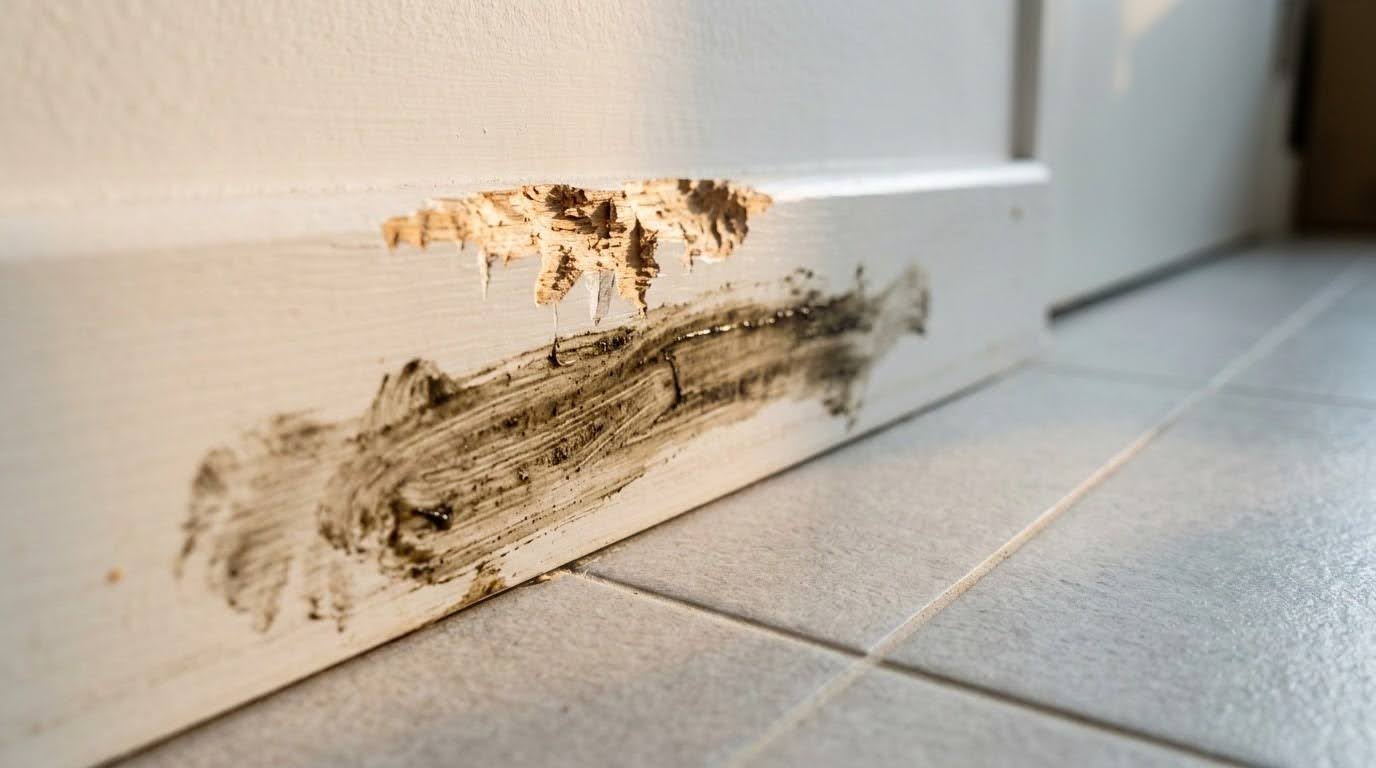
- Gnaw marks: Rodents continuously gnaw to keep incisors short. Damaged food packaging, electrical cables, and wooden furniture are common signs.
- Grease marks: Rats travel the same routes repeatedly, leaving dark smear marks on walls and skirting boards from the oils in their fur.
- Nesting materials: Shredded paper, fabric, insulation, or plant material found in hidden corners indicates active nesting.
- Scratching sounds: Movement in ceiling voids, walls, or under floorboards – especially at night when the house is quiet.
Why DIY Supermarket Solutions Fail
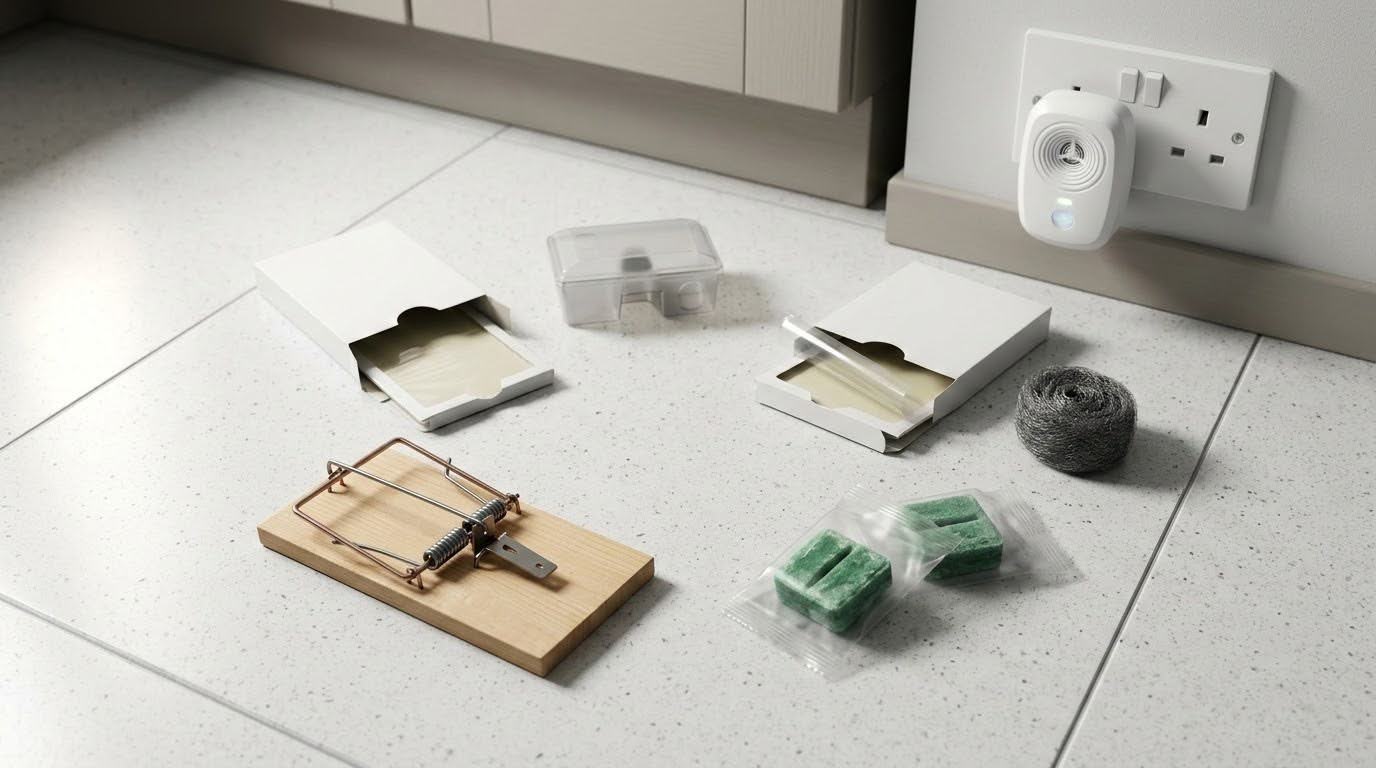
Most homeowners try supermarket poison blocks or snap traps first. These occasionally catch a rodent or two, but they almost never eliminate the infestation. Here is why – and for a full breakdown, see our guide on why DIY rodent control fails.
- Wrong bait placement: Rodents avoid new objects in their environment for days. Placing traps in the wrong locations catches nothing.
- No population assessment: Without knowing how many entry points exist and how large the colony is, treatment is guesswork.
- No entry point sealing: Even if existing rodents are eliminated, new ones enter within days through unblocked gaps.
- Rodents become bait-shy: After a failed trapping attempt, the surviving population becomes harder to catch.
- Dead rodents inside walls: Poison kills rodents in concealed locations. Decomposing carcasses inside ceilings create severe odour problems and secondary pest issues.
Pestopia’s 3-Step NEA-Approved Rodent Elimination Process
Pestopia provides residential pest control Singapore for rodent infestations using a systematic, warranty-backed approach.
Step 1 – Full Property Inspection
A licensed technician surveys the entire property – roof space, underfloor areas, drainage runs, external perimeter, and all utility entry points. The inspection identifies:
- Active runways and nesting sites
- All entry points (gaps, holes, pipe penetrations, roof junctions)
- Rodent species present based on droppings, damage patterns, and nesting material
- Population size estimate
This information forms the treatment plan. No two infestations are identical.
Step 2 – Multi-Point Baiting and Trapping
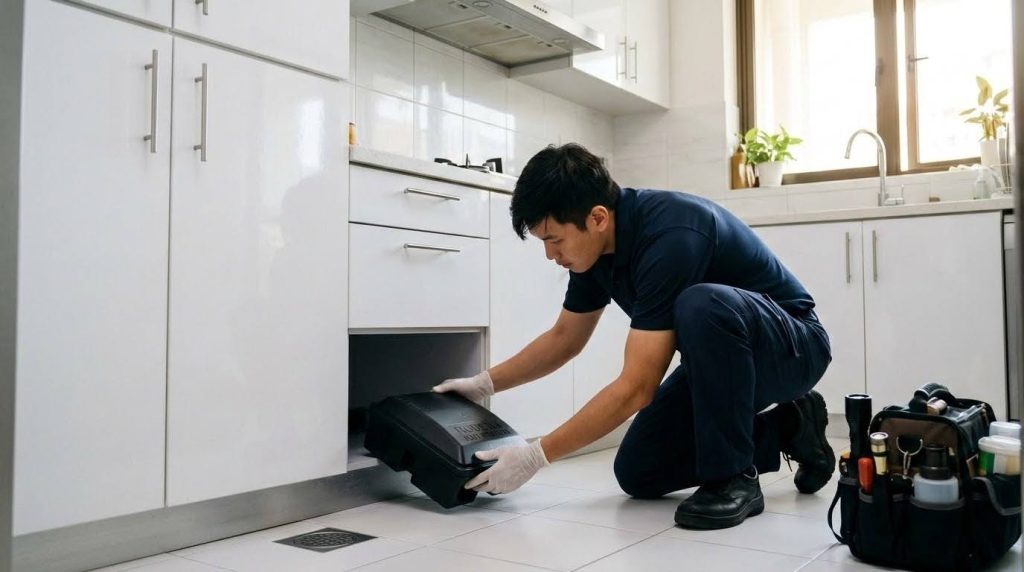
Based on the inspection, tamper-resistant bait stations are placed at strategic intervals around the property perimeter and at identified internal hotspots. For roof rats, trapping devices are placed inside ceiling access points.
NEA-approved rodenticide formulations are used exclusively – these meet Singapore’s regulatory requirements for safe use in residential environments. For HDB pest control Singapore situations, Pestopia coordinates with building management to ensure proper treatment of shared roof spaces and common area drains.
Step 3 – Entry Point Sealing and Monitoring
After the active population is eliminated, Pestopia identifies and advises where the entry points are. Follow-up visits confirm that bait consumption has stopped and no new activity is detected.
Clients receive a service warranty with the treatment – if rodent activity returns within the warranty period, Pestopia retreats at no charge.
Real Case Study: Tampines Flat with Roof Rat Infestation
A fourth-floor HDB flat in Tampines reported persistent scratching in the ceiling every night. The resident had purchased three different supermarket poison blocks over two months with no result.
Pestopia’s inspection found a roof rat colony nesting in the false ceiling above the master bedroom, with an entry point via a poorly sealed pipe penetration in the utility room. The internal ceiling space connected directly to the common corridor above via an unsealed junction.
Treatment involved installing bait stations inside the ceiling access point and two external locations on the service balcony. Within 10 days, bait consumption stopped. A follow-up inspection confirmed no new droppings or activity.
The resident had spent over $80 on supermarket products before calling a professional. The professional treatment cost less than three months of DIY attempts – and actually worked.
Frequently Asked Questions
How long does professional rodent treatment take to work?
Most infestations show significant reduction within 7–14 days. Complete elimination, including confirmation of no new activity, typically takes 3–4 weeks from the first treatment visit.
Is rodent bait safe for children and pets?
Pestopia uses tamper-resistant bait stations that prevent access by children and pets. All rodenticide formulations used are NEA-approved and applied strictly according to label instructions. Technicians provide specific safety instructions for households with young children or pets.
Can rats return after treatment?
Without entry point sealing, new rodents can enter from outside. Pestopia includes entry point assessment. The warranty covers re-infestation within the stated period.
Does Pestopia treat commercial rodent infestations?
Yes. Pestopia provides rodent control for restaurants, warehouses, offices, and factories. See the full commercial pest control Singapore service page for more information.
Get Rid of Rodents Permanently
Rodent infestations do not resolve on their own. The colony grows, the damage worsens, and the health risks increase. Pestopia provides NEA-approved rodent control Singapore services with a proven 3-step process and warranty-backed results.
Contact Pestopia today for a full inspection. Same-day assessments are available for urgent cases.