Not all rats are the same – and treating the wrong type of infestation with the wrong method is the fastest way to waste money without solving the problem.
Singapore has two primary rat species that infest residential and commercial properties: the roof rat (Rattus rattus) and the Norway rat, also called the sewer rat (Rattus norvegicus). Understanding the differences between them is the foundation of effective rat control. For a full guide covering mice as well, see our complete rodent control guide.
Roof Rats: The Ceiling Dweller
Roof rats are the most commonly encountered rat species in Singapore’s HDB flats and landed properties. Their name reflects their behaviour: they climb, they live high, and they enter homes from above.
Physical Characteristics
- Body length: 16–20 cm, plus a tail longer than the body
- Slender build, pointed snout, large eyes and ears
- Dark brown or black fur, lighter grey or white underside
- Weight: 150–200g – lighter than Norway rats
Where Roof Rats Live
Roof rats nest in elevated locations. In HDB flats, they are most commonly found in:
- False ceilings and ceiling voids above bathrooms and kitchens
- Roof spaces and attic areas in landed properties
- Inside air conditioning duct runs and insulation material
- Behind built-in wardrobe units and between wall partitions
- Inside structural cavities accessed through pipe penetrations
Signs of a Roof Rat Infestation
- Scratching and scurrying sounds in the ceiling: Most noticeable in the hour after lights out. Roof rats are primarily nocturnal.
- Droppings along ceiling beams and inside wall cavities: Banana-shaped, 12–14mm long, pointed at one end.
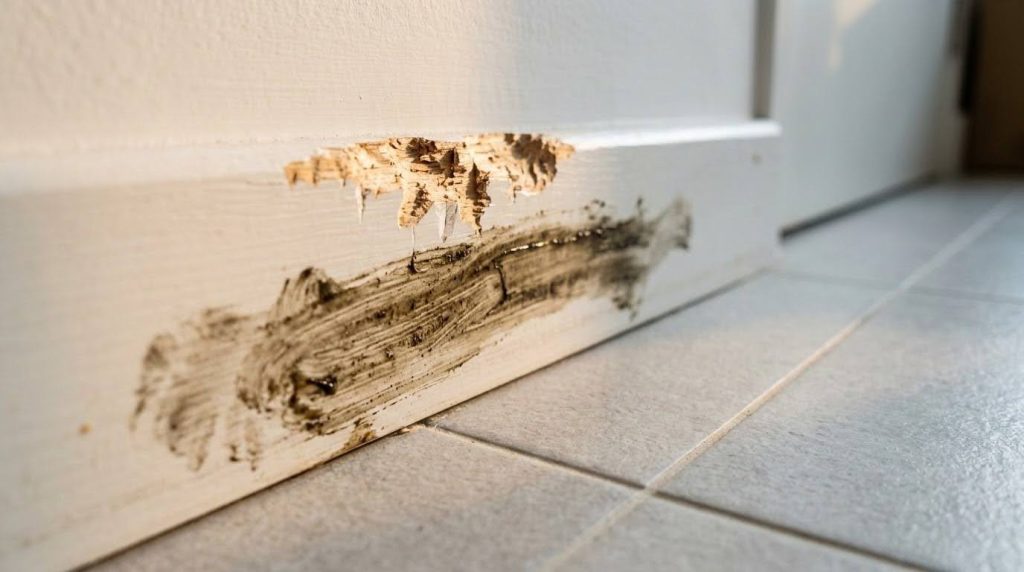
- Gnaw marks on exposed wiring: Roof rats gnaw through plastic insulation on electrical cables. This is a fire hazard and a critical warning sign.
- Greasy smear marks on pipes and structural beams: The same wall-following behaviour as sewer rats, but at height.
- Fruit and food missing from kitchen countertops: Roof rats prefer fruits, vegetables, and nuts. Missing produce without obvious explanation warrants investigation.
Health Risks Associated with Roof Rats
Roof rats are associated with leptospirosis, salmonellosis, and rat-bite fever. Their urine contaminates surfaces and food preparation areas. NEA regularly reminds residents via public health advisories that rodents pose significant disease transmission risks in densely populated housing.
Sewer Rats (Norway Rats): The Ground-Level Threat
Norway rats are larger, more aggressive, and typically harder to eliminate than roof rats. They are ground-level nesters and are closely associated with drainage infrastructure – earning their common name, sewer rat.
Physical Characteristics
- Body length: 20–25 cm, with a tail shorter than the body
- Heavy, stocky build with a blunt rounded snout
- Brown or grey fur, lighter underside
- Weight: 300–500g – significantly heavier than roof rats
Where Sewer Rats Live
Norway rats prefer ground level. In Singapore’s residential environment, they are found in:
- Underground drain networks and sewer connections
- Burrows under concrete slabs, garden beds, and bin centres
- Ground-floor void spaces in landed properties
- Drain inspection chambers and kitchen floor traps
- Under piles of stored goods, furniture, and construction debris
Signs of a Sewer Rat Infestation
- Burrow entrances in garden soil or near bin centres: Clean circular holes (5–8 cm diameter) with loose soil piled at the entrance.
- Large droppings near ground-level food sources: Capsule-shaped pellets, 20mm long, scattered along walls or near rubbish areas.
- Damage to ground-level fixtures: Gnaw marks on plastic drainage pipes, garden hose connections, and the base of timber fencing.
- Rat runs along walls and fence lines: Norway rats follow fixed paths repeatedly, creating smooth, worn tracks along skirting boards and wall bases.
- Splashing or movement sounds from floor drains at night: Activity in drainage systems beneath the home.
Health Risks Associated with Sewer Rats
Norway rats are the primary vector for leptospirosis in Singapore. They shed the Leptospira bacteria through urine, which contaminates standing water, soil, and surfaces. Humans can contract leptospirosis through skin contact with contaminated water – a particular risk during flood events or garden work.
Sewer rats are also associated with rat-bite fever (from bites or scratches) and food contamination with salmonella from droppings.
Why Roof Rats Are Harder to Eliminate Than Sewer Rats
Homeowners often find sewer rat infestations easier to confirm – the damage is visible at ground level, burrows are obvious, and traps can be placed along known run paths.
Roof rats are more challenging for three reasons:
- Concealed nesting locations: False ceilings and wall cavities are inaccessible without professional inspection equipment.
- Bait station placement difficulties: Standard floor-level bait stations do not reach ceiling-nesting populations. Stations must be placed inside ceiling access points or in elevated locations.
- Entry points are harder to locate: Roof access gaps, pipe runs through walls, and utility penetrations require a full building assessment to identify.
For HDB pest control Singapore situations involving roof rats in shared ceiling spaces, treatment requires coordination with building management to ensure the entire affected zone is treated – not just one unit.
Room-by-Room Inspection Guide
Use this guide to systematically check your property for signs of both rat species:
Kitchen
- Check behind and beneath all appliances for droppings
- Inspect the base of lower cabinet units for gnaw marks
- Look for grease marks along the base of walls and skirting boards
- Check inside the toekick space under the kitchen cabinet base
Bathroom and Laundry
- Inspect the floor trap cover and the area around the pipe entry into the wall
- Check inside access panels for pipework (common entry point for roof rats)
- Look for droppings inside the false ceiling access hatch if present
Ceiling and Roof Spaces
- Listen for scratching between 10pm and 2am – peak activity period for roof rats
- Open ceiling access hatches and look for droppings, nesting material, or grease marks on beams
- Inspect all pipe and cable penetrations for unsealed gaps
Garden and External Areas
- Check along the fence line and against external walls for burrow entrances
- Inspect the bin centre area for droppings or gnaw marks
- Look for smooth wear on the base of walls indicating regular rat movement
Professional Rat Control: What to Expect
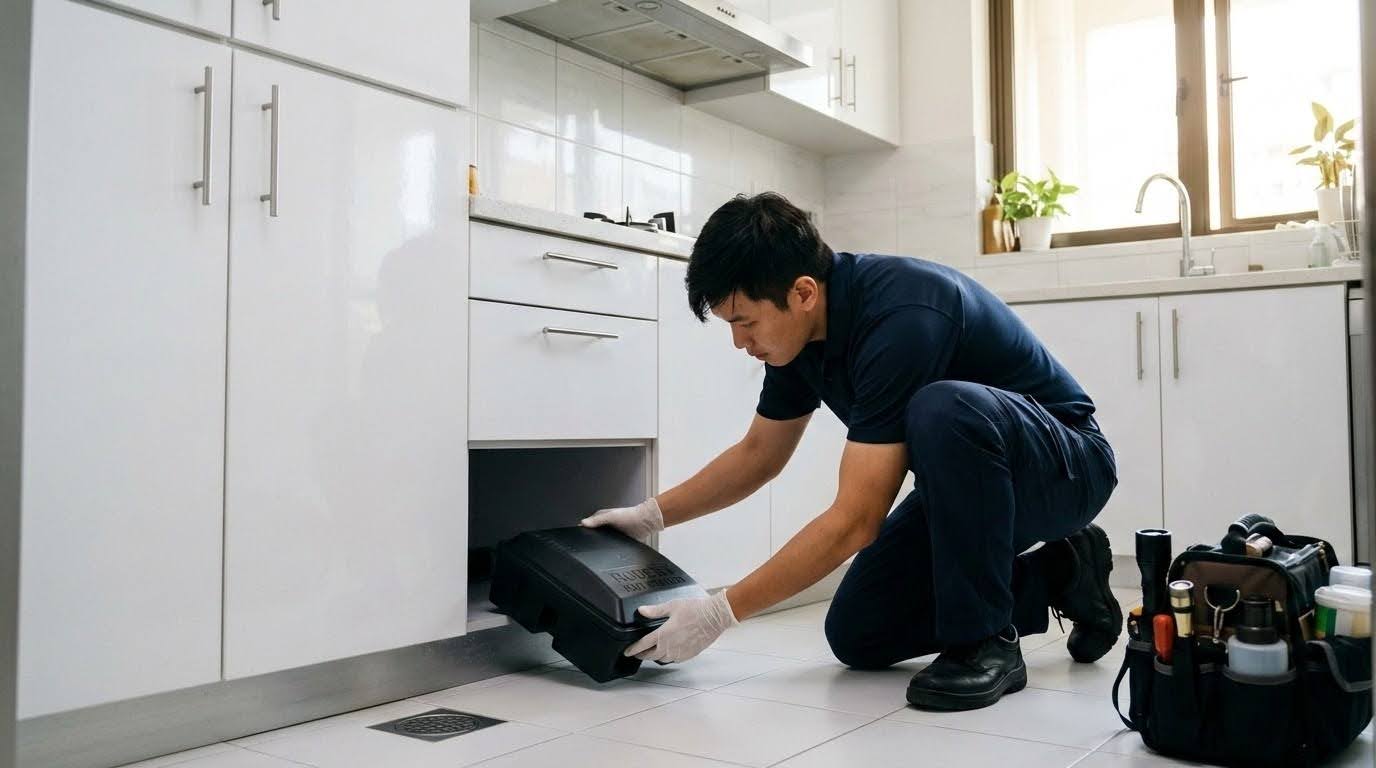
Pestopia provides professional rodent control Singapore for both roof rat and sewer rat infestations. The approach differs based on species and nesting location.
For roof rats, the treatment involves ceiling void inspection, elevated bait station placement, and comprehensive entry point sealing at roof junctions and pipe penetrations.
For sewer rats, the treatment involves perimeter bait station installation, drain and burrow treatment, and structural recommendations for sealing ground-level entry points.
Pestopia also provides commercial rat control for restaurants, warehouses, and factories where rodent infestations pose food safety and regulatory risks.
Frequently Asked Questions
Can roof rats and sewer rats infest the same property simultaneously?
Yes, though it is uncommon. Multi-storey landed properties with both roof access and ground-level drainage connections can harbour both species. The treatment plan must address both independently – different trap and bait placements are required.
Are sewer rats more dangerous than roof rats?
Both species carry significant disease risks. Sewer rats carry higher leptospirosis risk due to direct contact with drainage systems. Roof rats pose a greater fire risk due to their tendency to gnaw electrical wiring. Both require professional treatment.
How quickly can a rat infestation grow?
A female rat can produce 5–7 litters per year, with 6–12 pups per litter. Under good conditions, two rats can become 40 in three months. Early detection and treatment is critical – infestations that go untreated for more than a few weeks become significantly harder and more expensive to eliminate.
Act Before the Damage Escalates
Rats do not stay in one location – they expand their territory as the population grows. Gnawed wiring, contaminated food, structural damage, and health risks all increase with every week of delay. Pestopia provides expert rat control for HDB, condo, and landed properties across Singapore.
Book an inspection today. Early detection saves repair costs, health risks, and months of failed DIY attempts.
References
Ministry of Health Singapore. (2023). Leptospirosis Disease Information.
World Health Organisation (WHO). (2023). Rodent-Borne Diseases.
Pestopia. (2025). Rodent Identification and Control Singapore.
Pestopia. (2025). Rodent Control Singapore — Complete Service.