Commercial pest control is often thought of in terms of restaurants and food establishments, but construction sites and offices carry their own pest risks that are just as capable of causing a compliance problem, a safety issue, or reputational damage if left unmanaged. Pest control for construction sites and offices in Singapore requires a different lens than residential treatment, and contractors and facilities managers who understand the compliance side avoid most of the problems before they start.
Why Construction Sites Attract Pests
A construction site combines several conditions that make it especially attractive to pests: stored building materials that go undisturbed for weeks, stagnant water collecting in uncovered containers, pits, or equipment after rain, exposed food waste from workers on site, and temporary structures with gaps that would never exist in a completed building. Rodents are drawn to stored materials and quiet, low-traffic zones, while stagnant water becomes a mosquito breeding site within days during Singapore’s humid climate. Because construction sites are also large, often sprawling areas, pest activity can establish itself in a far corner of the site long before it becomes visible near active work zones.
What NEA and BCA Compliance Actually Requires
Contractors in Singapore operate under overlapping compliance expectations. The National Environment Agency enforces vector control requirements — meaning any site with standing water is expected to have measures in place to prevent mosquito breeding, and repeated breeding site detections can result in enforcement action. Separately, safety and welfare inspections tied to a site’s BCA obligations increasingly look at general site hygiene, including pest presence, as part of a broader worker welfare assessment. A site that fails a vector inspection or draws attention during a safety audit because of visible pest activity faces delays that are entirely avoidable with a scheduled pest management programme.
Mosquito Breeding Prevention Is Non-Negotiable
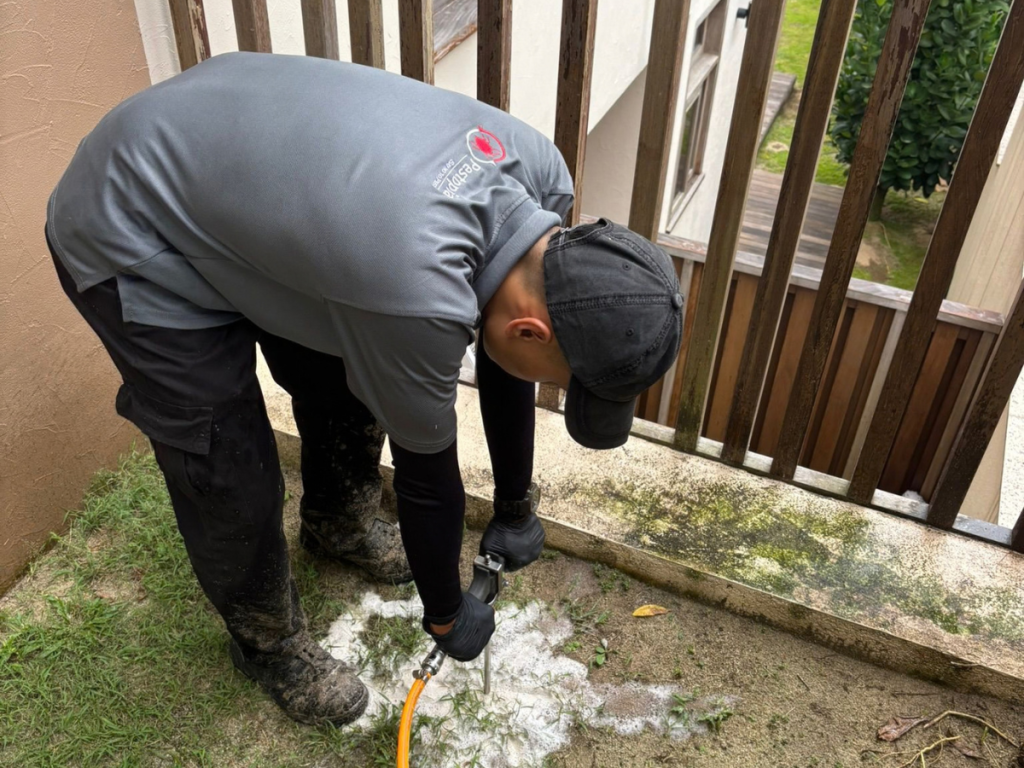
Because dengue remains an active public health concern in Singapore, mosquito breeding prevention on construction sites is treated with particular seriousness. According to the National Environment Agency, sites with standing water are expected to have active measures preventing mosquito breeding, and repeated breeding site detections can result in enforcement action. This means regularly checking and clearing standing water in equipment, uncovered containers, and low-lying areas of the site, rather than waiting for a scheduled pest control visit to catch it. A professional programme typically combines routine site checks with larvicide treatment in unavoidable water-collection points that cannot be fully drained.
Offices Need a Different, More Discreet Approach
Pest control for offices in Singapore carries a different set of constraints. Treatment usually needs to happen outside business hours or with minimal disruption during them, since visible pest control activity during the workday can alarm staff and clients alike. Common problem areas in offices include pantries and shared kitchens, where food is stored and prepared inconsistently across many employees, as well as document storage rooms, where paper and cardboard create ideal cockroach and silverfish habitat that goes unnoticed for long periods.
A discreet office pest control programme typically uses gel baiting and monitoring stations placed out of sight — inside cabinetry, behind equipment, along skirting boards — rather than visible spray treatments during the day. Scheduling after-hours or weekend visits avoids the disruption entirely while still allowing thorough treatment of every problem area. Facilities teams managing multiple floors or tenants often find it useful to coordinate this scheduling with building management, so treatment across shared risers and common areas happens on a consistent timeline rather than piecemeal, floor by floor.
Why Businesses and Factories Face Compounding Risk
Pest control for businesses and factories in Singapore often combines the risks of both categories above: factories can have construction-site-style storage and materials handling alongside office-style administrative areas, meaning a single pest management plan needs to account for very different environments within one property. Factories handling any form of packaged goods or food products carry additional NEA approved pest control obligations tied to their specific licensing category, and gaps in documentation here can affect operating licences, not just aesthetics. A factory manager should treat pest control documentation with the same seriousness as any other regulatory paperwork, since an incomplete or inconsistent pest log is one of the more common findings raised during routine licensing reviews.
Signs Contractors and Facilities Managers Should Watch For
On a construction site, the early indicators worth flagging to a site supervisor include rodent droppings near stored materials or site offices, mosquito larvae visible in any standing water (small wriggling movement near the surface), gnaw marks on cabling or timber stacked for extended periods, and increased insect activity around waste collection points. In an office, the equivalent signs are more subtle — a musty smell from a pantry cupboard, small dark droppings in drawer corners, silverfish or paper-damage in long-untouched storage boxes, and cockroach sightings near photocopier rooms or break areas where food traces accumulate over time. Reporting these early, rather than waiting for a scheduled inspection, is what keeps a minor issue from becoming a documented compliance finding.
Building a Compliance-Ready Pest Management Plan
A properly documented commercial pest control programme includes scheduled visits with dated records, a clear log of any breeding sites identified and how they were addressed, and a named point of contact responsible for pest-related issues on site. This documentation matters most during an actual audit or inspection, when being able to produce a consistent record — rather than reconstructing what happened from memory — is what separates a minor note from a serious finding.
For a broader look at how commercial pest risks extend to hospitality and F&B settings as well, see our guide on commercial pest control in Singapore, which covers requirements specific to restaurants and hotels.
Frequently Asked Questions
How often should a construction site be checked for mosquito breeding sites?
Ideally daily during and after rainfall, since standing water can become a breeding site within as little as a week during Singapore’s climate.
Can office pest control be done without disrupting staff during the day?
Yes — most office pest control is scheduled after hours or on weekends specifically to avoid disrupting daily operations, using discreet gel baiting rather than visible spraying.
Does a factory need a different pest control plan than a standard office?
Yes — factories combine storage and materials-handling risks similar to a construction site with administrative office areas, so treatment needs to account for both environments separately.
What happens if a construction site fails a vector control inspection?
Repeated breeding site detections can result in enforcement action from NEA, along with potential delays to site operations while corrective measures are verified.
Do I need documented pest control records for a compliance audit?
Yes — a dated log of visits, findings, and remediation is typically expected during safety, welfare, or NEA-related audits, and having this ready in advance avoids delays during inspection.
Who should be responsible for reporting pest sightings on a construction site?
Ideally, a single named point of contact — often a site supervisor or EHS officer — so that sightings are logged consistently and addressed before the next scheduled pest control visit rather than being reported informally and forgotten.
Keep Your Site or Office Compliant and Pest-Free
Pest control for construction sites and offices in Singapore is about staying ahead of both the pest risk and the compliance requirements tied to it. Contact Pestopia to set up a scheduled, documented pest management programme for your site.
REFERENCES:
National Environment Agency. (2026). Dengue Prevention. NEA Singapore. https://www.nea.gov.sg/dengue-zika/dengue
National Environment Agency. (2026). Licensing Requirements for Vector Control Services. NEA Singapore. https://www.nea.gov.sg/docs/default-source/our-services/pest-control/advisories-and-circulars/licensing-requirement-for-vector-control-services.pdf