Hearing scratching in the false ceiling or finding droppings beside the kitchen cabinet is unsettling in any home, but in an HDB flat it raises an extra question: where are the rats actually coming from? In most cases, the answer is outside the unit. Bin centres, refuse chutes, service ducts and drainage pipes connect every flat to shared spaces where rats feed and nest. Effective rat control Singapore residents can rely on has to deal with both the rats already inside and the routes that brought them in.
Why Rats Are Drawn to HDB Estates
Rats need three things: food, water and shelter. The National Environment Agency notes that poorly managed bin centres and refuse chutes, overflowing bins, uncleared stray animal feeding and improper disposal of food waste give rats the conditions they need to feed and nest (NEA, Rat Control). HDB estates have many of these in shared spaces, so rats can live close to homes even when individual flats are kept spotless.
This is a recognised public health issue at the national level. In a 2025 written parliamentary reply, the Ministry of Sustainability and the Environment stated that poor refuse management creates conducive conditions for rats, and that NEA regularly shares rat surveillance data with town councils to support prevention and control (MSE, 2025).
How Rats Get Into HDB Flats
Refuse Chutes and Bin Chambers
HDB blocks built between the 1960s and 1989 generally use individual refuse chutes, where a hopper in each kitchen feeds into a bin chamber on the ground floor. Blocks built after 1989 use central refuse chutes located in the common area of each floor. A national study of HDB waste collection premises found that rodent droppings, gnaw marks and rub marks were strongly associated with rodent activity in both chute rooms and bin chambers (Scientific Reports, 2023). If rats are active in the chute system, a hopper door left open or damaged becomes a direct route into the kitchen.
Drains, Floor Traps and Sewer Pipes
Sewer rats are strong climbers and swimmers that move easily through drainage systems. An NEA-led study of a residential block found that rodent activity in bin chambers was strongly associated with broken floor traps and with defects in the wastewater pipe under the chamber (Infection Ecology & Epidemiology, 2022). Inside homes, damaged floor traps and missing covers in bathrooms and kitchen yards are common entry points for the same reason.
Service Ducts, Pipes and Gaps
Roof rats and house mice are agile climbers that travel through service ducts, along pipes and into false ceilings. Gaps around air-conditioning pipes, gas pipes and cable entries can be enough for a mouse to squeeze through. Once inside a false ceiling, rodents can move between rooms without being seen, which is why scratching noises at night are often the first sign residents notice.
Signs of an Active Rat Infestation
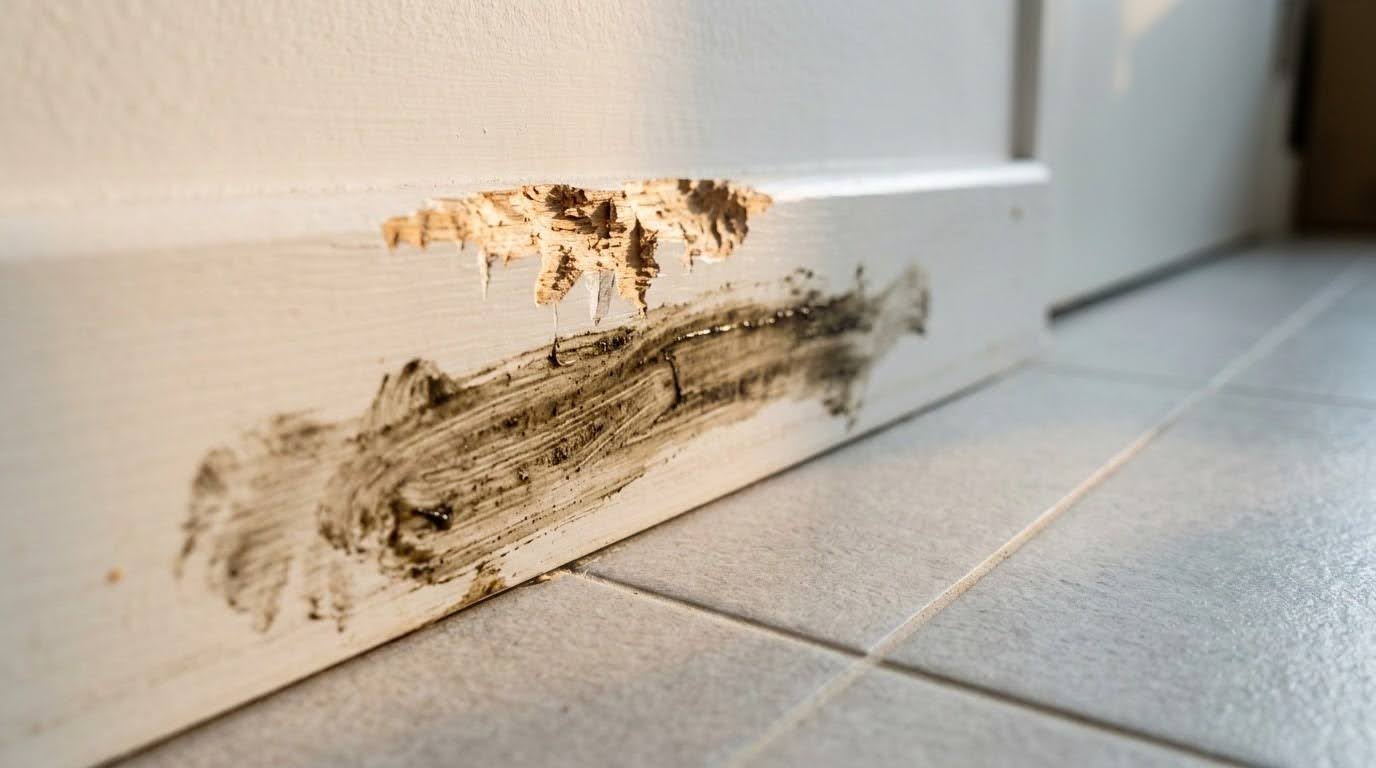
NEA lists rat burrows, droppings, rub marks, gnaw marks and squeaking sounds as possible signs of a rat infestation. Inside a flat, that usually means droppings in cabinets, under the sink or along skirting; gnawed food packaging, wires or plastic; dark grease marks along walls, pipes or ceiling edges; scratching or running sounds in the ceiling at night; and shredded paper or fabric used as nesting material. Finding more than one of these signs usually means a proper pest infestation treatment Singapore plan is needed rather than a single trap from the supermarket. Fresh droppings tend to be dark and soft, while older ones are dry and crumbly, which helps tell current activity apart from an old problem.
What Residents Can Fix and What Needs the Town Council
Inside Your Flat
Residents can reduce risk by tying up rubbish properly before putting it down the chute, keeping the hopper door closed when not in use, storing food in sealed containers, fixing leaking taps and replacing missing floor trap covers. Sealing small gaps around pipes with suitable materials also helps. Households already dealing with cockroaches or ants alongside rodents may find regular home pest control more practical than treating each pest separately.
Common Areas
Bin centres, refuse chute rooms, drains and common corridors are managed by the town council. If you see burrows, droppings or rats in these areas, report them to your town council so the source can be treated. Town councils typically engage pest control contractors for common areas, but those contractors do not treat inside individual flats, so problems inside the unit remain the resident’s responsibility.
How Professional Rat Control Works in an HDB Flat
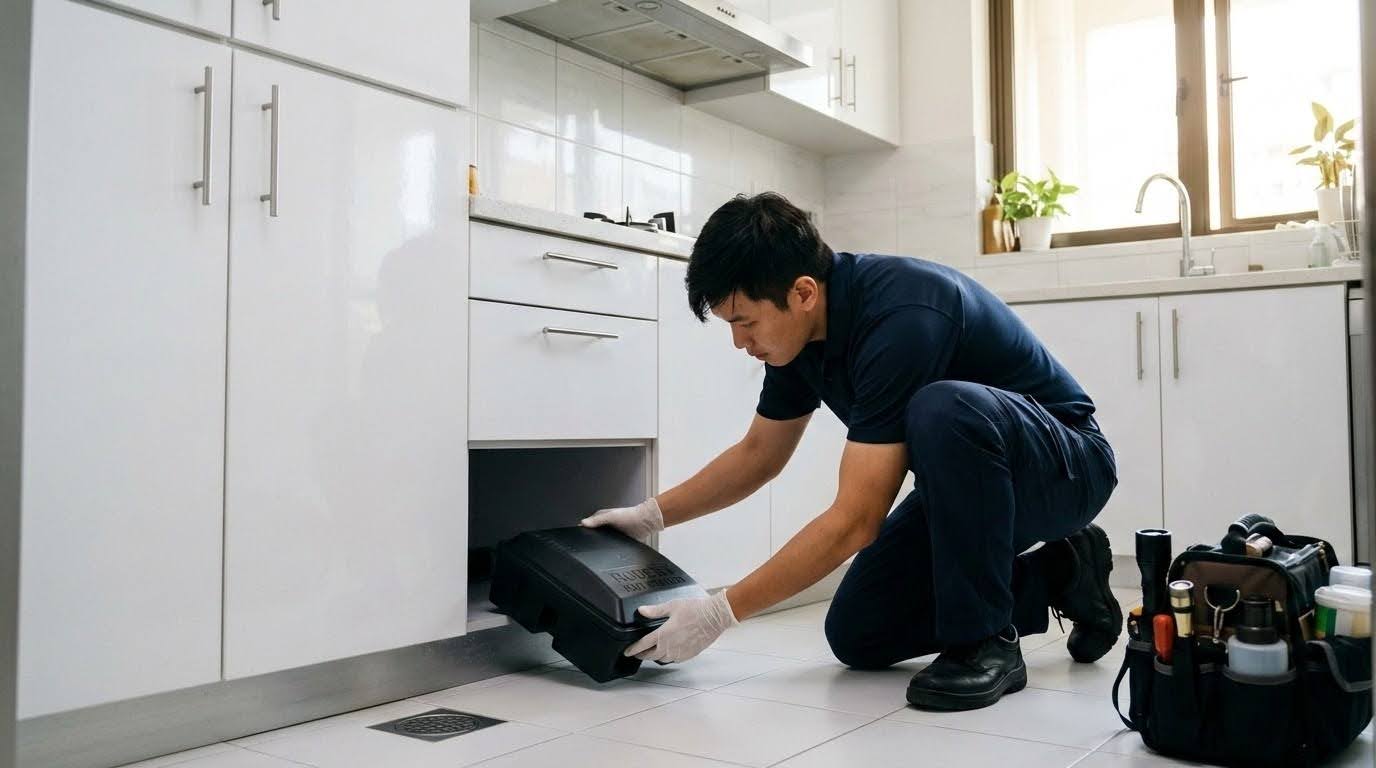
A professional approach usually has three stages. First, an inspection identifies the species, the entry points and the areas where rats are active. Second, the technician reduces the population with a combination of trapping and, where it is safe, tamper-resistant bait stations; in flats with young children or pets, trapping is often preferred indoors. Third, entry points are proofed, for example by sealing gaps and recommending floor trap covers, followed by monitoring visits to confirm activity has stopped. Each visit should come with a short report on what was found and what was done, so you can see progress over time.
NEA advises engaging licensed vector control operators to carry out a comprehensive and sustained rat surveillance and control programme rather than relying on one-off fixes. This is why effective rodent control Singapore services include follow-up visits. Pestopia’s rodent control service follows this structure, and residents can learn more about flat-specific treatment on our pest control for HDB flats page.
Why DIY Rat Control Often Fails in Flats
Poison baits placed without a plan can lead to rats dying inside false ceilings or wall cavities, leaving an odour that is difficult to remove. Glue traps placed in the wrong spots often catch nothing, because rats are cautious around unfamiliar objects. Most importantly, DIY methods rarely deal with entry points, so new rats arrive as soon as the first ones are gone. If you have also noticed large cockroaches near the hopper or floor traps, [LINK TO: Post 24 — German vs American Cockroaches in Singapore: Why the Right ID Changes the Treatment] explains why the same entry points let them in too.
Frequently Asked Questions
Are rats in HDB flats usually roof rats or sewer rats?
Both are found. Sewer rats are larger and usually come from drains and bin chambers, while roof rats and house mice are more likely to be found in false ceilings and kitchen cabinets.
Should I report rats in my block’s bin centre?
Yes. Bin centres and refuse chute rooms are managed by the town council, so report sightings, droppings or burrows there.
How long does rat control take in a flat?
It depends on the size of the infestation. Many cases need several visits over a few weeks, covering trapping or baiting, proofing and monitoring.
Is rat poison safe to use in a flat with children or pets?
Rodenticides can be dangerous if children or pets handle or eat them. Professionals use tamper-resistant stations or trapping and plan placements around the household.
Will sealing my flat stop rats for good?
Proofing makes a big difference, but if rats are active in the block’s chutes or drains, report it to the town council as well so the source is treated.
Stop Rats at the Source
Rats in an HDB flat are rarely just an indoor problem, and dealing with the entry points is what keeps them out for good. Contact Pestopia to book an inspection and a rat control plan built around your flat and your block.
REFERENCES:
- National Environment Agency. (n.d.). Rat Control. NEA Singapore. https://www.nea.gov.sg/our-services/pest-control/rat-control
- Ministry of Sustainability and the Environment. (2025). Written Reply to Parliamentary Question on Littering and Rodent Activity in HDB Towns. MSE Singapore. https://www.mse.gov.sg/latest-news/written-reply-to-parliamentary-question-on-littering-and-rodent-activity-in-hdb-towns-feb-2025/
- Scientific Reports. (2023). Rodent activity in municipal waste collection premises in Singapore: an analysis of risk factors using mixed-effects modelling. PubMed Central. https://pmc.ncbi.nlm.nih.gov/articles/PMC9943821/
- Oh, H.Y.P., Humaidi, M., Chan, Q.Y., Yap, G., et al. (2022). Association of rodents with man-made infrastructures and food waste in Urban Singapore. Infection Ecology & Epidemiology, PubMed Central. https://pmc.ncbi.nlm.nih.gov/articles/PMC8803118